- Nootropic Blend Team
- Updated January 22, 2026
- Affiliate disclosure
We prioritize readers, not ads. Editorial independence. Free, factual information. A small fee from product links, no extra cost to you.
NooCube is one of the better-known caffeine-free nootropic supplements, designed to support focus, memory, and everyday cognitive performance. But how much of its reputation is supported by science, and how does it perform in real life?
In this NooCube review, I share my experience after 90 days of testing NooCube Brain Productivity 2.0, including what I noticed about concentration, mental clarity, and productivity.
Since my original test, NooCube has introduced its updated v3.0 formula, replacing several key ingredients, including Alpha-GPC and Oat Straw. I’ll examine these changes, assess the current ingredient doses against available research, and explore whether the latest formula still offers good value.
The goal is simple: separate personal experience, scientific evidence, and marketing claims to help you decide whether NooCube is worth considering.
Editor's Rating: ★ ★ ★ ★ ★ 4.3/5
Table of Contents
Nootropic Blend Editorial Review
NooCube Review Summary (2026)
NooCube Brain Productivity is a caffeine-free nootropic supplement combining 12 listed nutrients and botanical ingredients. Its current v3.0 formula takes a broad approach to cognitive support, with Bacopa monnieri, L-theanine, VitaCholine®, Panax ginseng, and Lutemax® 2020.
The formulation is interesting, but not every ingredient has equally strong human evidence at the included dose. Research on individual ingredients should not be confused with clinical proof that the complete product improves memory or focus.
and ingredients
30 daily servings
US price
money-back guarantee
At a Glance
- Caffeine-free formula without a stimulant-driven energy boost.
- Includes Bacopa monnieri, studied for certain memory outcomes.
- Contains L-theanine and L-tyrosine, both investigated for aspects of mental performance.
- Features Lutemax® 2020, a carotenoid complex researched for eye and cognitive outcomes.
- Updated v3.0 formula uses VitaCholine® and Panax ginseng instead of some older ingredients.
- Full ingredient amounts are disclosed on the Supplement Facts label.
What We Like
- Caffeine-free approach may appeal to people avoiding additional stimulants.
- Transparent ingredient quantities, without a proprietary blend.
- Bacopa and L-theanine have relevant human research, although results vary.
- Includes branded Lutemax® 2020 and VitaCholine® ingredients.
- Vegetarian-friendly capsule formulation.
- Multi-bottle purchasing options and a 60-day advertised guarantee.
What Could Be Better
- The finished v3.0 formula lacks publicly identified human clinical trials.
- Some ingredient doses are below commonly studied amounts.
- Choline bitartrate is not interchangeable with the previous Alpha-GPC source.
- Benefits for neuroprotection and long-term brain health remain uncertain.
- Public batch-specific independent testing documentation is not readily available.
- Higher cost than some simpler single-ingredient alternatives.
Our Bottom Line
NooCube v3.0 is a thoughtfully assembled, stimulant-free supplement with several interesting ingredients. However, its complete formula has not been shown in published clinical trials to deliver all its advertised cognitive benefits. It may be worth comparing with other nootropic options, particularly if you prioritize transparent dosing and a caffeine-free formula.
Pricing checked October 28, 2026. Single bottle: $64.99; three-month supply: $129.99 (US storefront, one-time purchase). Free shipping is advertised for orders over $79.99. Prices, offers, and return conditions may change. Check the official store before ordering.
What Is NooCube Brain Productivity?
NooCube Brain Productivity is a caffeine-free nootropic supplement developed by Wolfson Brands, a UK-based supplement company.
Its current v3.0 formula combines 12 listed nutrients and botanical ingredients, including Bacopa monnieri, L-theanine, Panax ginseng, and Lutemax® 2020.
Unlike stimulant-based products, NooCube takes a broader approach to cognitive support, targeting memory, attention, and mental fatigue through multiple ingredients.
However, the finished formula has not been clinically proven to improve cognitive performance. The available evidence comes primarily from studies of individual ingredients.
For a broader perspective, explore our guide to natural nootropics and their scientific evidence.
My 90-Day NooCube Test Results
Editor’s Note: My 90-day test was conducted with NooCube Brain Productivity 2.0. The results below reflect my personal experience with that formula, not the current v3.0 version.

NooCube was actually one of my first experiences with nootropics. I discovered it after years of shift work, late-night projects, and periods of poor sleep that gradually affected my energy, motivation, and concentration.
Since then, I’ve tested both the original NooCube formula and the later Brain Productivity 2.0 version. What interested me most wasn’t whether NooCube could give me a quick mental boost, but whether it could help me stay focused, creative, and productive throughout a demanding day.
What I Noticed During My First 90 Days
My first experience was surprisingly positive, although the effects weren’t always immediate.
During the first weeks, I noticed a calmer state of concentration, especially while working on demanding video editing projects. On one occasion, I spent seven hours editing without the mental fatigue I would normally expect.
I also noticed changes outside work. Swimming felt easier to approach, conversations became more fluid, and I felt more comfortable switching between creative and technical tasks.
By weeks six to nine, I was particularly interested in the effects on mental endurance and creativity. I found myself reading for longer periods, recalling words more easily, and enjoying music sessions with greater attention to rhythm and technical details.
But the experience wasn’t perfectly consistent. Some days I still felt tired, and better sleep, exercise, and dietary changes were all part of my routine. Looking back, I can’t separate their contribution from the effects I attributed to NooCube.
My Experience With NooCube 2.0
Over the course of another three months, I personally tested NooCube’s Brain Productivity 2.0 formula, taking it consistently to evaluate its real-world impact on focus, memory, and mental clarity.
Within 15 to 45 minutes of taking the recommended two capsules, I typically felt a noticeable uplift in concentration and clarity that lasted around four hours or longer.
What stood out was the familiar sense of calm productivity. I could stay engaged in demanding tasks without feeling overstimulated.
What I noticed most:
Sharper focus and less perceived brain fog during work
Better verbal fluency and creativity in conversations
Easier decision-making and switching between tasks
Improved motivation and mood during workouts
Less perceived mental fatigue after demanding days
On particularly demanding days, I also experimented with higher amounts than the recommended serving. This was part of my personal experience, not something I would recommend others copy.
I experimented with taking breaks as well, although I can’t establish whether this prevented tolerance.
In short, NooCube felt like having a cognitive coach in capsule form. It was less about a sudden rush of energy and more about a clearer, calmer mind that made everyday tasks feel more manageable.
Is NooCube v3.0 Actually Better?
This is where things get interesting.
The latest NooCube v3.0 formula removes Alpha-GPC and Huperzine A, replacing the previous choline approach with VitaCholine® (choline bitartrate). It also introduces Panax ginseng in place of Oat Straw.
On paper, this changes the character of the formula.
Alpha-GPC has been investigated for cognitive function, particularly in people with cognitive impairment, while choline bitartrate is primarily a nutritional source of choline. They are not interchangeable in terms of clinical evidence.
Panax ginseng is an interesting addition for mental fatigue and cognitive performance, but its effectiveness depends on the extract, standardization, and dose.
So is v3.0 an improvement?
Not necessarily.
The new formula may offer a different balance of ingredients, but newer doesn’t automatically mean more effective. And without testing v3.0 myself or seeing convincing clinical evidence for the complete reformulation, I wouldn’t claim it performs better than the versions I used.
My experience with the earlier formulas remains positive. Whether the latest version delivers the same calm focus, mental endurance, and creativity is still an open question.
That’s why the next section looks beyond the marketing and examines the actual ingredients, doses, and scientific evidence.
NooCube Ingredients: What Does the Evidence Say?
NooCube Brain Productivity v3.0 contains 12 listed nutrients and botanical ingredients, with their individual amounts disclosed on the label.
But a scientifically studied ingredient isn’t necessarily effective at every dose. Some components have encouraging human research, while others rely largely on preliminary findings.
NooCube v3.0 Ingredients and Evidence
| Ingredient | Amount | Evidence Assessment |
|---|---|---|
| Bacopa monnieri (20% bacosides) | 250 mg | Promising memory research; extract and dose matter |
| L-Theanine | 100 mg | Human evidence for attention; stress benefits less certain at this dose |
| L-Tyrosine | 250 mg | Potential under acute stress; limited support for this dose |
| Panax Ginseng (8:1) | 20 mg | Interesting, but extract standardization matters |
| VitaCholine® (choline bitartrate) | 250 mg (100 mg choline) | Nutritional choline source; cognitive benefits unproven |
| Lutemax® 2020 | 20 mg | Emerging human evidence for visual and cognitive outcomes |
| Cat’s Claw (4:1) | 175 mg | Limited direct human cognitive evidence |
| Trans-Resveratrol | 14.3 mg | Preliminary cognitive research; dose is relatively low |
| Pterostilbene | 140 mcg | Insufficient human cognitive evidence |
| Vitamin B1 | 1.1 mg | Essential for normal neurological function |
| Vitamin B12 | 2.5 mcg | Supports neurological health, particularly when correcting deficiency |
| Biotin | 50 mcg | Essential nutrient; no convincing benefit for focus in otherwise healthy people |
Amounts reflect the current v3.0 Supplement Facts label. Evidence assessments concern individual ingredients, not clinical validation of NooCube as a finished product.
Which Ingredients Stand Out?
Bacopa monnieri remains one of NooCube’s more interesting ingredients. Several human trials suggest benefits for certain aspects of memory after sustained use. However, many studies used 300–450 mg of specific extracts, making direct comparisons with NooCube’s 250 mg formula difficult.
L-theanine is another reasonable inclusion. Recent research suggests modest benefits for attention, particularly in certain cognitive tasks. Still, stronger findings for stress reduction often involve higher doses than NooCube provides.
Lutemax® 2020 adds something different. Its lutein and zeaxanthin carotenoids have been investigated for visual health and some cognitive outcomes. It’s an interesting addition for people spending long hours in front of screens, although claims about preventing screen fatigue should not be overstated.
Where the Formula Falls Short
The biggest limitation isn’t the number of ingredients. It’s whether their doses and forms are sufficient to deliver meaningful benefits.
L-tyrosine, resveratrol, and several botanical extracts appear less convincing at the amounts provided. VitaCholine® supplies choline, but shouldn’t be treated as a clinically equivalent replacement for Alpha-GPC.
And while combining ingredients may sound impressive, synergy needs to be demonstrated, not assumed.
Our Take
NooCube v3.0 brings together several worthwhile ingredients, but the scientific support is uneven.
Bacopa, L-theanine, and Lutemax® 2020 offer some of the more interesting research angles. Other components contribute nutritional support or remain experimental from a cognitive perspective.
The formula is evidence-informed, not clinically proven as a complete stack.
That’s an important distinction when deciding whether NooCube offers enough value compared with simpler supplements or other premade nootropic stacks.
NooCube v3.0: What Changed and Why It Matters
NooCube has gone through several reformulations since I first tested it. The latest Brain Productivity v3.0 replaces some familiar ingredients, making the formula more accessible to vegetarians and people avoiding certain allergens.
But does that make it a better nootropic?
Old vs New NooCube Formula
| Previous Formula | Current v3.0 | What It Means |
|---|---|---|
| Alpha-GPC (50 mg) | VitaCholine® (250 mg choline bitartrate) | Different choline source, not necessarily better cognitive support |
| Huperzia serrata extract (20 mg, 0.5% Huperzine A) | Removed | Eliminates a potent cholinesterase-inhibiting ingredient |
| Oat Straw Extract (150 mg) | Panax Ginseng 8:1 (20 mg) | Changes the botanical profile, with more relevant cognitive research for some ginseng extracts |
| Biotin | D-Biotin | Primarily a formulation and sourcing change |
| Magnesium Stearate | Vegetable Magnesium Stearate | Supports vegetarian suitability |
Comparison based on historical and current Supplement Facts labels.
The Biggest Trade-Off: Alpha-GPC vs VitaCholine®
This is probably the most interesting change.
Alpha-GPC was one of the ingredients that made the older formula attractive from a nootropic perspective. VitaCholine® provides dietary choline, but there isn’t convincing evidence that it offers superior cognitive benefits.
NooCube describes the change as an improvement in allergen suitability and bioavailability. That’s a manufacturer’s claim, not proof of better memory or concentration.
Is Panax Ginseng an Upgrade?
Potentially, but the dose matters.
Panax ginseng has some human research suggesting benefits for cognitive performance and mental fatigue. However, NooCube contains just 20 mg of an 8:1 extract, and its clinical equivalence to studied extracts isn’t established.
It’s an interesting replacement for Oat Straw, but calling it a clear upgrade would be premature.
Our Verdict on v3.0
The new formula has some practical advantages, especially its vegetarian-friendly composition and updated ingredient sourcing.
However, removing Alpha-GPC and Huperzine A also changes its original nootropic profile.
My take: v3.0 looks like a reasonable reformulation, but not necessarily a more effective one.
Having experienced both the original NooCube and Brain Productivity 2.0, I’d be particularly interested in whether v3.0 maintains the same calm focus, creativity, and mental endurance I previously noticed.
Until the finished formula is properly tested, that’s still an open question.
Does NooCube Actually Work?
Based on my experience with the original NooCube and Brain Productivity 2.0, I noticed meaningful improvements in focus, mental clarity, and everyday productivity.
What I appreciated most was the absence of a strong stimulant-like rush. Instead, I experienced a calmer, more sustainable sense of concentration that helped me stay engaged in creative work and demanding tasks.
But personal experience and clinical evidence are two different things.
What Does the Science Support?
Several NooCube ingredients have been investigated in human studies, particularly Bacopa monnieri, L-theanine, and carotenoids found in Lutemax® 2020.
The findings are encouraging in certain areas, but they don’t establish that NooCube v3.0 delivers the same benefits.
There are three important limitations:
No confirmed clinical trials of the complete v3.0 formula.
Some ingredient doses differ from those used in successful studies.
Individual results can be influenced by sleep, stress, lifestyle, and expectations.
Realistic Expectations
NooCube shouldn’t be viewed as a shortcut to better cognitive performance.
Its caffeine-free approach may appeal to people looking for a gentler supplement, but the available evidence doesn’t establish how noticeable its effects will be in healthy adults.
My takeaway: Earlier NooCube formulas worked well for me, especially during mentally demanding periods. The latest v3.0 formula remains promising on paper, but its real-world effectiveness still needs to be demonstrated.
NooCube Side Effects & Safety
NooCube v3.0 is caffeine-free and no longer contains Huperzine A, but that doesn’t automatically make it free of side effects.
Although several ingredients have been studied individually, long-term safety data for the complete v3.0 formula remain limited.
Possible Side Effects
Depending on individual sensitivity, potential reactions include:
Headaches or mild digestive discomfort
Nausea or diarrhea
Sleep disturbances or nervousness, particularly with Panax ginseng
Allergic reactions to certain ingredients
These are possible ingredient-related effects, not established rates of side effects for the finished product.
Who Should Be Cautious?
Panax ginseng may interact with certain medications, including blood thinners and diabetes treatments. Other ingredients may also require caution depending on individual medical conditions.
Pregnant or breastfeeding individuals, anyone under 18, and people taking medications should avoid use unless an appropriately qualified healthcare professional advises otherwise.
Is NooCube Safe for Daily Use?
The absence of caffeine and Huperzine A changes the formula’s safety profile, but stimulant-free doesn’t mean risk-free.
There is also insufficient evidence to establish that cycling NooCube prevents tolerance or improves its long-term safety.
Our take: NooCube contains several familiar supplement ingredients, but the current combination lacks comprehensive long-term safety testing. Follow the product label and consult a healthcare professional if you have medical conditions or take medication.
NooCube Price, Discounts & Refund Policy
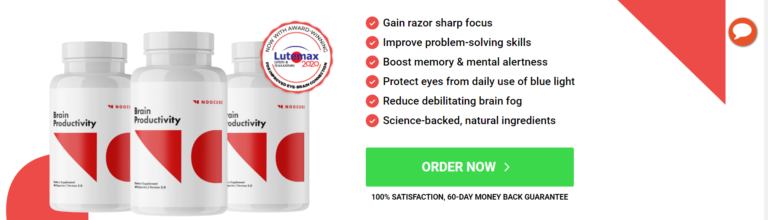
NooCube Brain Productivity v3.0 is available through its official website, with discounts for larger orders.
Current NooCube Pricing
| Package | Price | Cost Per Day |
|---|---|---|
| 1 bottle (30 days) | $64.99 | $2.17 |
| 3 bottles (90 days) | $129.99 | $1.44 |
| 5 bottles (150 days) | $194.99 | $1.30 |
US prices for one-time purchases, checked October 28, 2026. Shipping is advertised as free on orders over $79.99. Prices and promotions may change.
Is NooCube Worth the Price?
At $2.17 per day for a single bottle, NooCube isn’t particularly cheap. The three-month package offers better value, but buying more doesn’t guarantee better results.
Considering the mixed strength of its ingredient evidence, I’d compare NooCube with other nootropic formulas before committing to a larger package.
60-Day Money-Back Guarantee
NooCube advertises a 60-day refund policy, but there are conditions.
According to its official guarantee policy, customers must obtain return authorization and return the products within the specified period. Refunds exclude shipping charges and are subject to a 5% handling fee.
It’s worth reading the full conditions before purchasing.
NooCube vs Mind Lab Pro vs Alpha BRAIN
NooCube isn’t the only caffeine-free supplement designed for cognitive performance. Mind Lab Pro and Alpha BRAIN take different approaches, particularly when it comes to choline sources, botanical extracts, and ingredient transparency.
How Do the Formulas Compare?
| Feature | NooCube v3.0 | Mind Lab Pro v4 | Alpha BRAIN |
|---|---|---|---|
| Caffeine-free | Yes | Yes | Yes |
| Choline source | VitaCholine® | Cognizin® | Alpha-GPC |
| Bacopa monnieri | Yes | Yes | Yes |
| L-Theanine | Yes | Yes | Yes |
| Lion’s Mane | No | Yes | No |
| Huperzine A | No | No | Yes |
| Distinctive ingredient | Lutemax® 2020 | Lion’s Mane, phosphatidylserine | Huperzine A |
Comparison based on manufacturers’ published formulas. Ingredient inclusion alone does not establish clinical effectiveness.
NooCube vs Mind Lab Pro
Mind Lab Pro v4 has a particularly interesting formulation, combining 250 mg of Cognizin® citicoline with Lion’s Mane, phosphatidylserine, Rhodiola rosea, and other ingredients.
NooCube takes a different approach with VitaCholine®, Panax ginseng, and Lutemax® 2020.
My assessment: Mind Lab Pro has a more compelling selection of ingredients for further cognitive research, but that doesn’t automatically mean better results in everyday use.
For a closer look at its formulation, clinical evidence, and real-world performance, read our Mind Lab Pro review.
NooCube vs Alpha BRAIN
Alpha BRAIN retains Alpha-GPC and Huperzine A, two ingredients removed from NooCube’s newer formula.
This creates a meaningful difference in their approach to acetylcholine, a neurotransmitter involved in learning and memory.
However, Huperzine A also deserves additional safety consideration because of its pharmacological activity.
For a closer look at its ingredients, dosing, and limitations, read our full Alpha BRAIN review.
Which Formula Makes More Sense?
All three products offer different combinations of ingredients, but none should be judged by ingredient count alone.
NooCube stands out for its carotenoid component, Mind Lab Pro for its broader selection of specialized nootropics, and Alpha BRAIN for retaining a more directly cholinergic approach.
The important question isn’t which formula looks most impressive on paper, but which ingredients have meaningful human evidence at the doses provided.
NooCube Review Conclusion: Is It Worth It in 2026?
After testing two generations of NooCube, my overall experience remains positive. What impressed me most wasn’t a dramatic mental boost, but the feeling of calm focus, greater mental endurance, and more natural productivity during demanding days.
That’s what initially made NooCube interesting to me, and why I continued exploring nootropics.
However, the latest Brain Productivity v3.0 formula deserves a more cautious assessment.
It introduces some worthwhile changes, but replacing Alpha-GPC and Huperzine A doesn’t automatically make it more effective. Several ingredients have promising research behind them, yet the finished formula still lacks convincing clinical evidence.
My Final Verdict
NooCube remains an interesting caffeine-free nootropic, but I wouldn’t call v3.0 a proven upgrade.
It may appeal to people who prefer a multi-ingredient supplement without caffeine, particularly those interested in memory, focus, and mental clarity.
Still, its relatively high price and uneven ingredient evidence make it worth comparing with alternatives.
My earlier NooCube experiences were genuinely positive. Whether the latest version can reproduce those results is something I’d want to establish through another proper test.
Good cognitive performance isn’t just about taking the right supplement. It’s also about building the conditions that allow your brain to perform well over time.
Explore the Best Nootropic Stacks
Compare ingredients, evidence, and value across popular nootropic formulas.
Compare Nootropic StacksRelevant posts

The 4 Healing Cat’s Claw Benefits | One Is a Nootropic

Big Guide To The Best 9 Racetams Nootropics
